

Navigating official paperwork in a foreign language can be daunting, especially when the documents in question determine life-changing milestones. From applying for visas and enrolling in international schools to validating contracts and legal papers, accuracy is not just a preference—it’s a requirement. A single error or an unverified translation can lead to delays, rejections, or even legal complications.
This is where notarized translations play a vital role. They ensure that your translated documents are not only accurate but also formally recognized by the institutions reviewing them. In countries like the Philippines, where sworn translators do not exist, notarized translations act as the accepted standard for authenticity. By securing one, you gain peace of mind knowing your paperwork will stand up to scrutiny, whether locally or abroad.
TL;DR
Notarized translations combine linguistic accuracy with legal validation. They are essential for official processes such as immigration, education, and legal transactions. In the Philippines, notarization substitutes for sworn translations, and Elite Translations delivers reliable, globally accepted notarized translations.
What Are Notarized Translations?
Notarized translations are not just ordinary translations. They come with a signed certification from the translator, attesting that the document has been translated faithfully and accurately. This is then verified by a notary public, whose seal validates the translator’s identity and the truthfulness of the statement.
As a result, notarized translations provide credibility and assurance. Institutions that demand high levels of authenticity—such as schools, embassies, and courts—consider notarization as proof that the translation can be trusted.
When Do You Need Notarized Translations?
Notarized translations are necessary whenever documents must carry official recognition. Without notarization, many institutions may refuse to process applications or legal matters, causing unnecessary delays.
Some of the most common documents requiring notarized translations include:
- Vital records: birth, marriage, divorce, and death certificates
- Educational papers: diplomas, transcripts, certifications
- Legal documents: contracts, wills, powers of attorney, affidavits
- Immigration paperwork: visas, passports, police clearances
- Business documents: patents, corporate filings, financial statements
Hence, having notarized translations ensures smoother processing. It prevents costly rejections and helps you meet the specific requirements of government agencies and legal authorities.
How Do Notarized Translations Differ from Sworn Translations?
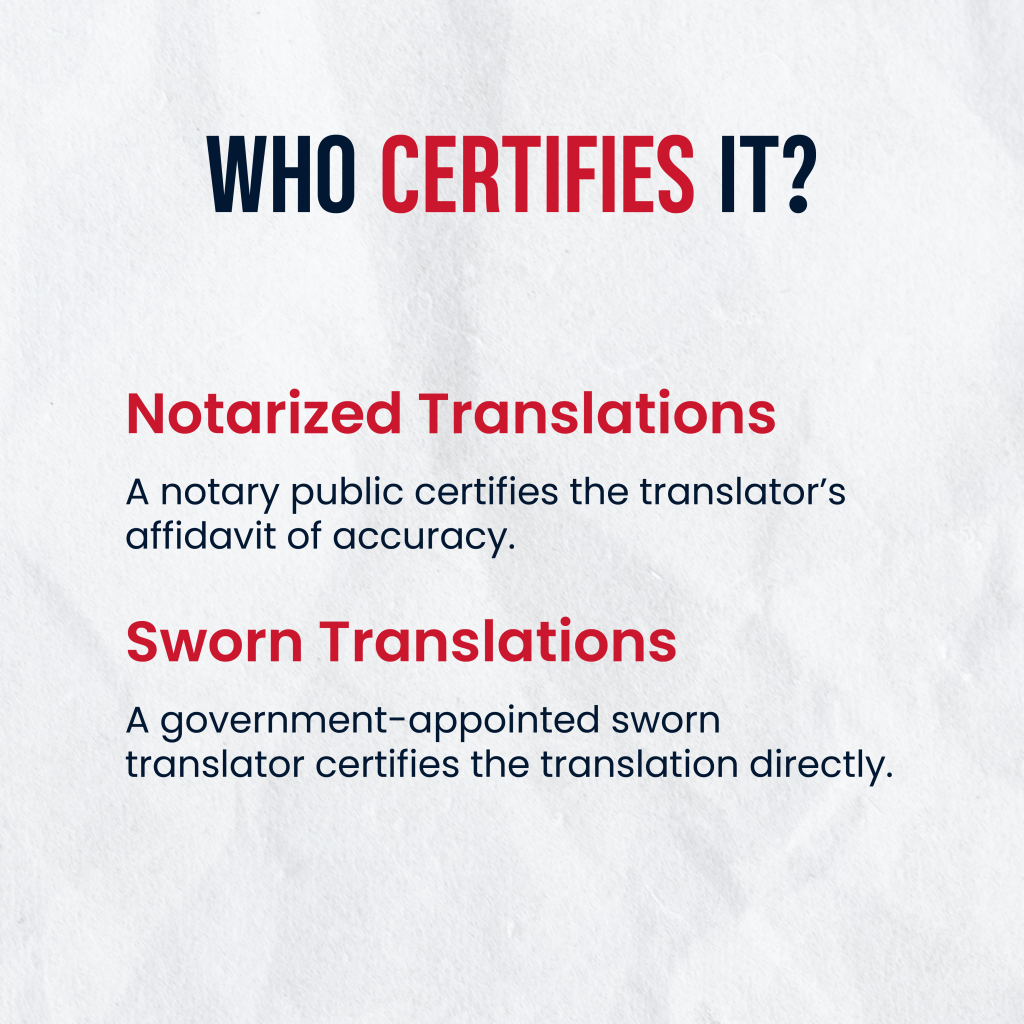
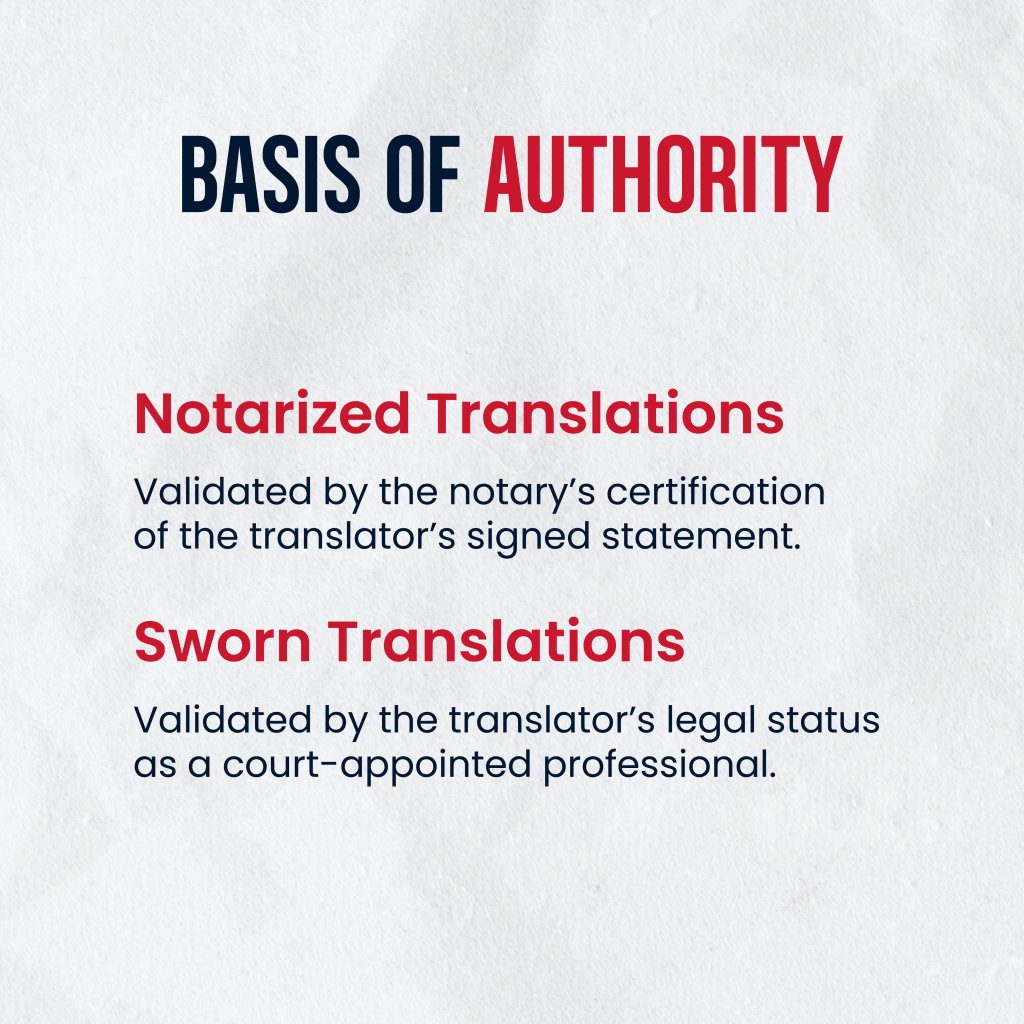
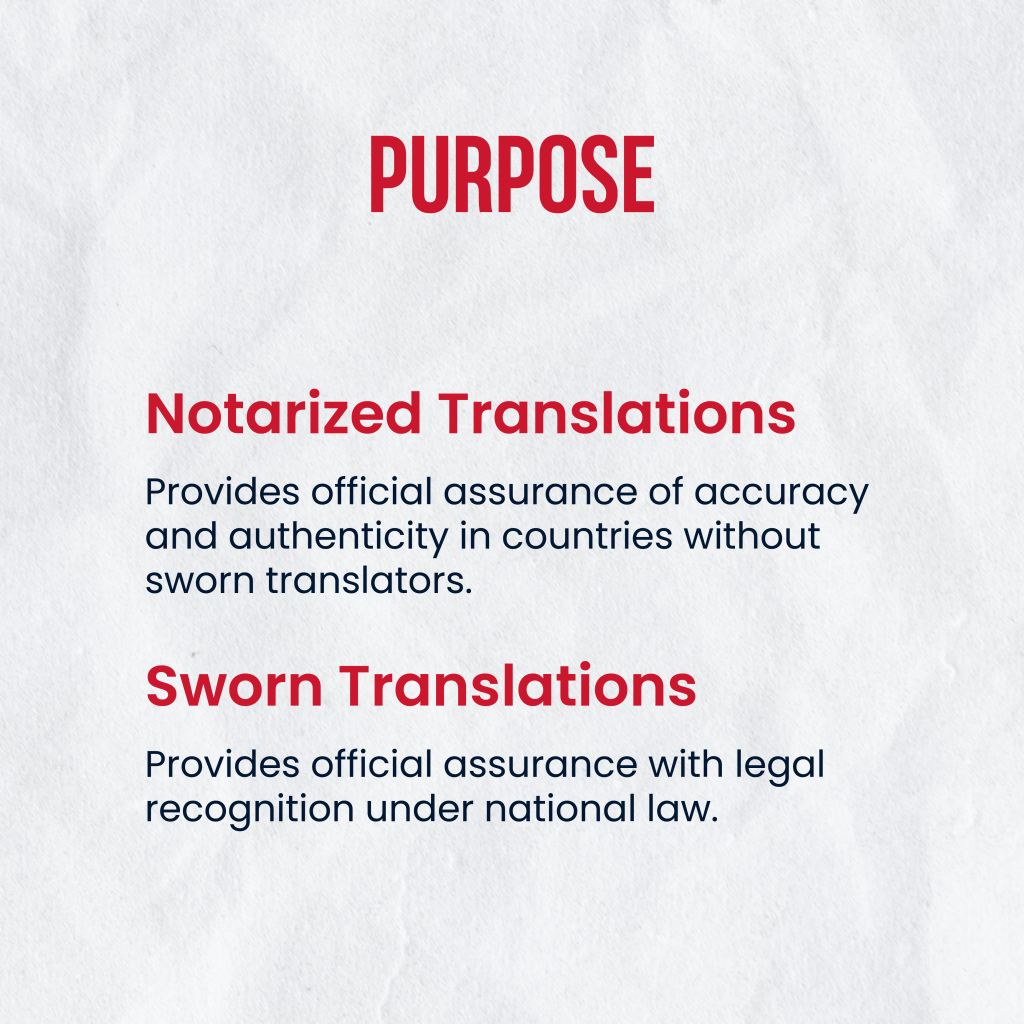
At first glance, notarized and sworn translations may seem the same, but they differ in their systems of recognition. In countries like Spain and Germany, sworn translations are handled by government-appointed translators who hold legal authority to certify their work.
However, in the Philippines, the United States, and the United Kingdom, there are no such court-appointed translators. Instead, notarization serves as the official substitute. The notary public certifies the translator’s signed affidavit, giving the document legal credibility.
Therefore, while sworn translations rely on the translator’s legal status, notarized translations rely on the notary’s certification. Both ensure the document is formally recognized and trusted by institutions.
Translation Notarization By Elite
Elite Translations has been a trusted name in the language solutions industry for over 15 years. We specialize in providing notarized translations for a wide range of documents, from vital records to complex legal agreements and corporate files.
Here’s how we make the process seamless for you:


- Certified Translators: Our linguists ensure every detail is translated accurately.
- Legal Coordination: We prepare the certificate of true translation and work with partner law offices for authentication.
- End-to-End Service: From translation to notarization, we handle every step so you don’t have to.
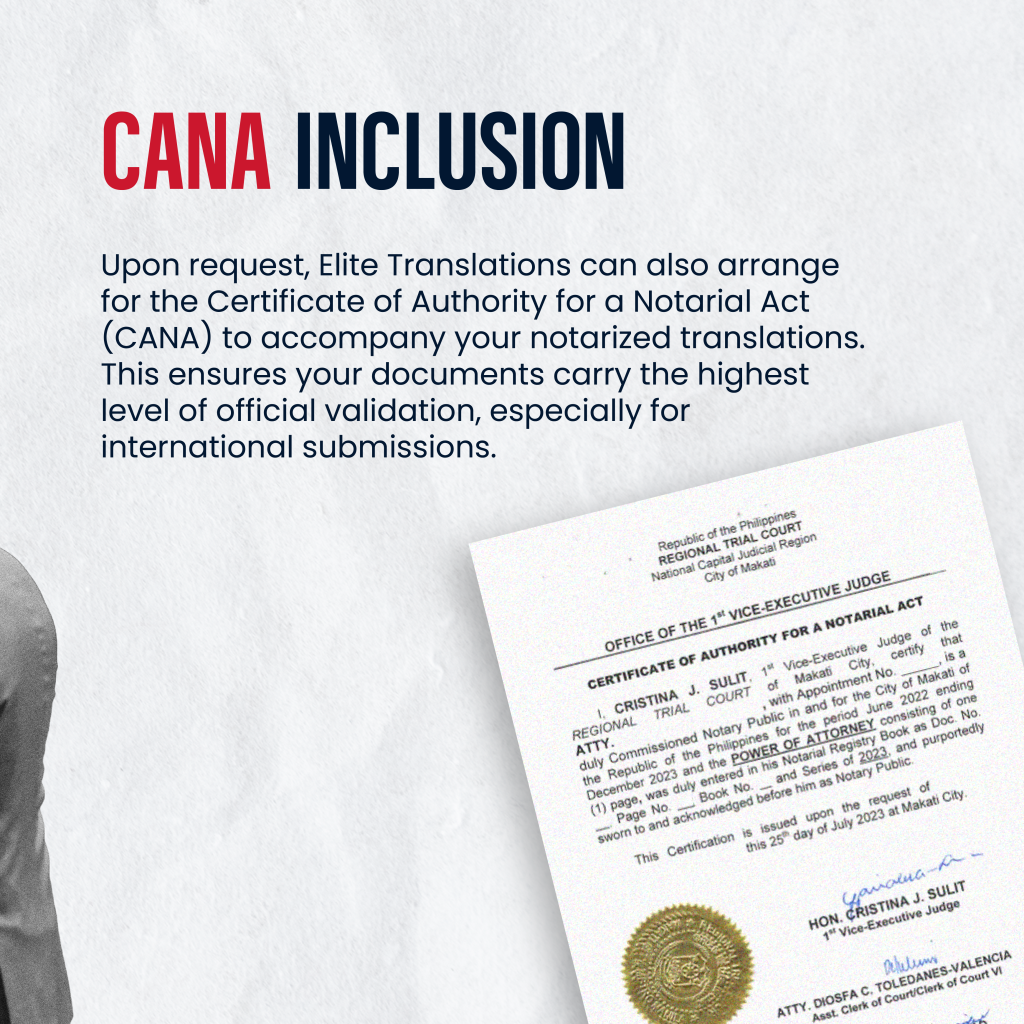
- CANA Inclusion: Upon request, Elite Translations can also arrange for the Certificate of Authority for a Notarial Act (CANA) to accompany your notarized translations. This ensures your documents carry the highest level of official validation, especially for international submissions.
By partnering with us, you not only receive translations that are linguistically accurate but also documents that meet the strict requirements of embassies, schools, courts, and businesses worldwide. This saves you time, reduces stress, and ensures your documents are always legally valid.
Why Choose Elite for Notarized Translations?
Your documents represent critical milestones, whether it’s securing a visa, applying to a foreign university, or validating a business contract. Thus, choosing a trusted provider is essential. With Elite Translations, you are guaranteed:
- Accuracy and cultural sensitivity
- Fast turnaround without compromising quality
- Global recognition of notarized documents
Undoubtedly, when accuracy and legality matter most, Elite Translations is your reliable partner.
Take the First Step Today
Do you need notarized translations for immigration, education, or legal purposes? Elite Translations is here to help. Contact us today for a free consultation and let our expert team deliver precise, notarized translations recognized worldwide.
Take the stress out of official paperwork and secure your notarized translations with Elite Translations now!
FAQs
Q: What is a notarized translation?
A: A notarized translation includes the translator’s signed affidavit of accuracy, which is then certified by a notary public.
Q: How do I get a translation notarized?
A: The translator signs a certificate of accuracy, and a notary public certifies it. Elite Translations can manage both steps for you so that you have one less requirement to worry about.
Q: Are notarized translations accepted internationally?
A: Yes. They are generally recognized worldwide, though requirements vary. Elite Translations can advise you on specific country or agency rules.