

In many immigration applications, applicants provide relationship proof that goes beyond formal documents such as marriage certificates or joint accounts. Immigration officers also examine communication logs as proof of relationship to confirm that a partnership exists genuinely and continues actively. Particularly, these logs include chat messages, emails, call histories, or letters that demonstrate how the relationship develops over time.
However, compiling and submitting these documents can be challenging. Immigration authorities such as Canada’s IRCC allow only limited pages and require certified translations if any of the content is not in English or French. Therefore, understanding how to prepare these logs correctly can make a significant difference in the strength of your application.
TL;DR
Communication logs as proof of relationship demonstrate the authenticity and continuity of your partnership. Immigration officers use them to verify that couples maintain regular contact. If your communication is not in English or French, certified translations are required. Elite Translations can translate and certify these documents accurately to meet official immigration standards.
What Are Communication Logs as Proof of Relationship?
Communication logs show ongoing interaction between partners. These records include printed or digital messages, emails, call records, and letters that partners exchange over time. Immigration offices consider such evidence essential in proving that a relationship remains real and active.
For example, immigration authorities such as Canada’s IRCC identify communication records as acceptable evidence when they evaluate relationships. They typically list letters, printed text messages, emails, or social media conversations that partners exchange over a period of time. Similarly, other countries request comparable forms of proof when they assess applications for spouse or partner visas.
When selecting what to include, applicants should focus on exchanges that show regular contact rather than isolated conversations. Messages that highlight shared milestones, meaningful discussions, or personal plans clearly demonstrate the relationship’s depth and sincerity.
What Types of Communication Logs Can Be Submitted?
When preparing your application, select representative examples of your communication rather than submitting every conversation. Immigration authorities typically allow a limited number of pages, so choosing meaningful samples matters more than quantity.
Accepted examples of communication logs include:
- Text and Chat Messages: Screenshots from messaging platforms such as WhatsApp, Messenger, or Viber that show dates and participants.
- Emails: Copies of personal emails exchanged between partners, ideally with visible timestamps.
- Call Records: Phone bills or app logs that indicate call dates and durations.
- Social Media Conversations: Chats or posts that show interactions on platforms such as Facebook or Instagram.
- Letters or Cards: Scanned copies of physical correspondence such as birthday or holiday cards.
Applicants should organize each record chronologically and label it clearly. Additionally, they should select excerpts that cover important periods in the relationship. For example, they can include anniversaries or family events along with everyday exchanges. This approach helps officers follow the relationship timeline and assess its consistency.
How Should You Organize and Present Communication Logs?


When you organize your communication logs properly, you help immigration officers review your documents quickly and understand the context of your relationship. Since they handle a large number of applications, you can make your submission stand out through clarity and structure. Therefore, you show credibility and attention to detail when you arrange your records carefully, making the process more than just a formality.
To make your logs clear and easy to follow, consider the following steps:
- Group your evidence by type. Separate chat messages, emails, call logs, and letters into their respective categories. This prevents confusion and helps officers identify the kind of communication they are reviewing.
- Arrange all records chronologically. Placing messages and documents in order of time allows the officer to see the natural development of your relationship.
- Label each item clearly. Include short captions that describe the context of each file, such as “Birthday Messages – July 2022” or “Video Call Logs – December 2023.”
Remember, when you organize your communication logs carefully, you not only demonstrate professionalism but also help verify your relationship timeline. Therefore, when immigration officers follow your story easily through clear and consistent documentation, they gain more confidence in the authenticity of your relationship.
How Can You Ensure the Readability of Your Screenshots?
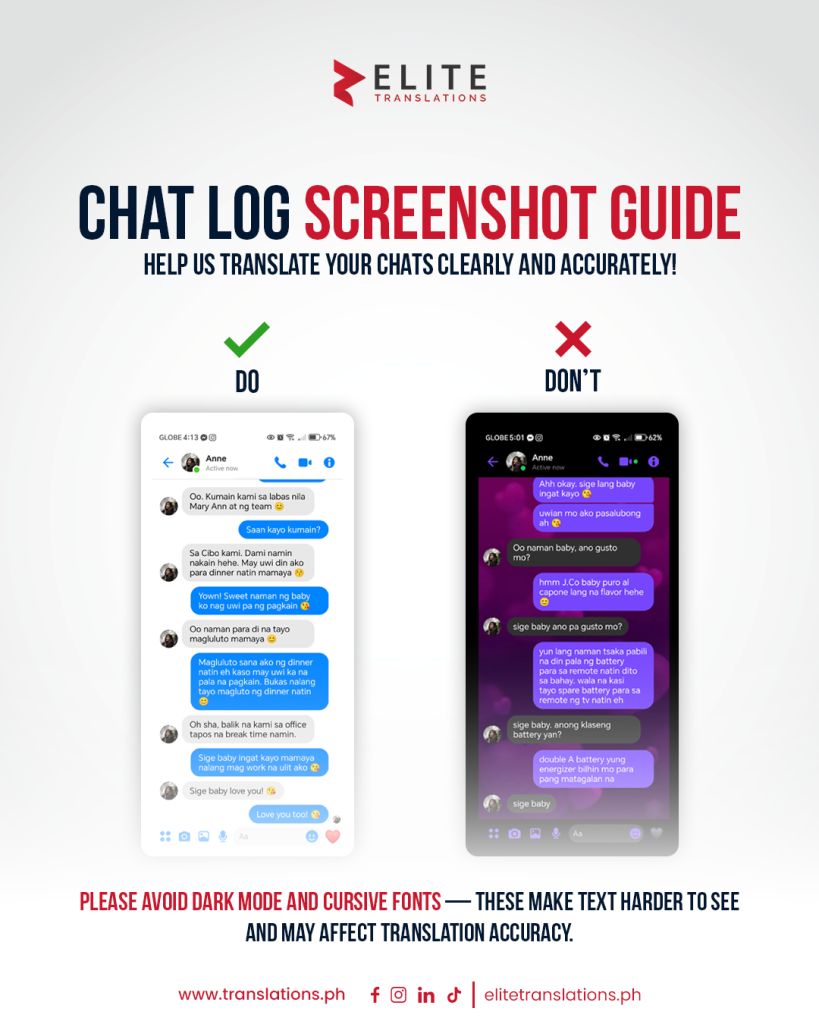
Clear and legible screenshots create a strong impression on immigration officers. Hence, since these images serve as your direct proof of communication, you ensure their readability to prevent misinterpretation or rejection.
To maintain clarity and consistency:
• Ensure all screenshots are bright and clear. Every line of text should be easy to read without distortion or glare.
• Avoid blurry, dark mode, or cropped images. Poor-quality visuals make it difficult for reviewers to verify dates and participants accurately.
• Use Light Mode whenever possible. Dark backgrounds consume more printer ink and reduce contrast in printed form. Sticking to default or light mode ensures text remains visible and professional-looking.
Naturally, well-presented screenshots help immigration officers review your documents efficiently and demonstrate how carefully you prepare them. Therefore, when you prioritize readability, you strengthen both the visual and professional quality of your submission.
Do Communication Logs Need Certified Translation?
Yes. For example, immigration authorities in Canada require applicants to submit all documents in English or French. If your communication records contain another language, you must provide a certified translation.
Specifically, guidelines state that any non-English or non-French materials must be submitted with:
- A certified copy of the original record,
- An official English or French translation, and
- A sworn affidavit from the translator confirming accuracy.
You cannot translate your own communication logs or assign this task to friends or family members. An independent, professional translator provides the certified translation.
When you compile translations, label each page clearly to distinguish the original document from the translated version. Keeping both versions side by side helps immigration officers cross-reference them easily.
How Can Elite Translations Help with Your Communication Logs?
Elite Translations specializes in providing certified translations for immigration and visa applications. Our team is equipped to handle communication records such as chat messages, emails, and call logs with precision and confidentiality.
We ensure that each translation meets embassy and immigration requirements, including translator affidavits and official seals. Furthermore, our translations are accepted by global embassies, government agencies, and immigration offices such as Canada’s IRCC.
Here is what you can expect when working with Elite:
• Certified and Accurate Translations: Every page is translated accurately and formatted to meet official standards.
• Expertise in Immigration Documents: We translate various types of communication, including chat messages, social media exchanges, and call records.
• Trusted Recognition: Our certifications are recognized and trusted by embassies and government authorities worldwide.
Entrusting your documents to us ensures accuracy, compliance, and peace of mind throughout your immigration process.
Ready to Submit Your Proof of Relationship?
Preparing your communication logs as proof of relationship requires you to select, organize, and translate each record carefully. So, if you need professional support in translating and certifying your communication records, Elite Translations provides the help you need.
Contact us today, translate and certify your communication logs with confidence, and move forward knowing your documents meet every official requirement.
FAQs
Q: What are communication logs in a visa application?
A: They include chat messages, call records, emails, and letters that show consistent contact between partners.
Q: Why are communication logs required?
A: They serve as evidence that the relationship is genuine and ongoing, helping officers verify authenticity.
Q: Do non-English communication logs need translation?
A: Yes. In Canada for example, immigration offices require certified translations into English or French, along with a translator’s affidavit.