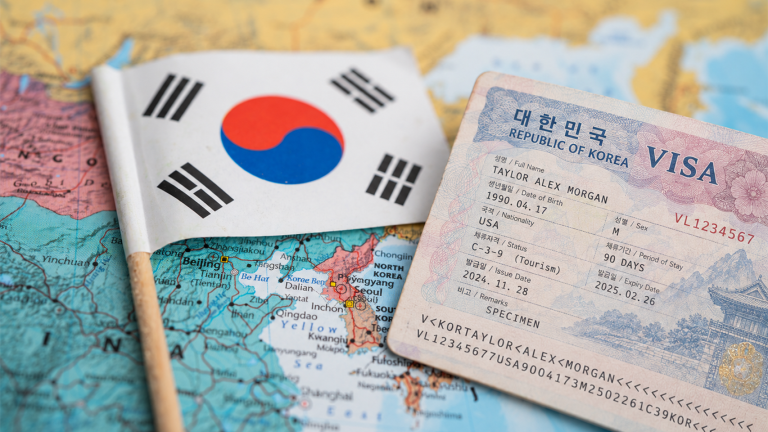

Planning a Japan itinerary isn’t just about checking places off a list—it’s about deciding whether you want to chase cherry blossoms in Kyoto, taste street food in Osaka, or stand in awe before Mount Fuji. With so many extraordinary choices, the real challenge isn’t where to go, but how to fit it all in. That’s why having a clear strategy ensures you make the most of every moment without missing the experiences that define Japan. Most importantly, you’ll also see how Elite Translations, together with our wider network at Elite WorldGroup, can support your journey with visa assistance services that help ensure a smooth and stress-free trip.
TL;DR
Planning a Japan itinerary is best done with 10 to 14 days, giving you enough time to explore Tokyo, Kyoto, Osaka, Hiroshima, and Mount Fuji without rushing. The ideal seasons to visit are spring for cherry blossoms and autumn for vibrant foliage, though winter and summer each offer unique experiences. To travel smoothly, prepare logistics in advance by securing a Japan Rail Pass, arranging pocket Wi-Fi, and respecting Japanese etiquette. Finally, make your journey stress-free with Elite World Group’s visa assistance services, helping you navigate requirements confidently so you can focus on enjoying your trip.
What Is the Ideal Japan Itinerary for First-Time Travelers?
For first-time visitors, an itinerary of 10 to 14 days strikes the right balance between exploration and relaxation. This length of stay allows you to experience Japan’s highlights without feeling rushed.
A shorter visit of 5 to 7 days can still be rewarding, but it often requires focusing on just one region—for instance, Tokyo with nearby day trips to Hakone or Nikko. Conversely, longer trips of two to three weeks are best for travelers who want to explore beyond the Golden Route and venture into less-visited areas like Hokkaido or Kyushu.
Therefore, the “ideal” Japan itinerary depends on your travel goals. Whether you crave cultural immersion, food adventures, or scenic escapes, Japan’s diverse offerings ensure there is something for everyone
When Is The Best Season To Visit Japan?



Japan is a year-round destination, but each season dramatically shapes the experience.
- Spring (March–May): Famous for cherry blossoms and pleasant weather.
- Summer (June–August): Hot and humid, but vibrant with festivals and fireworks.
- Autumn (September–November): Known for stunning red and gold foliage.
- Winter (December–February): Ideal for skiing in Hokkaido and enjoying winter illuminations.
Most travelers choose spring and autumn for their trips, as these months combine mild weather with breathtaking scenery. In 2024, Japan welcomed nearly 37 million international visitors, and the first half of the year alone saw over 17.7 million arrivals, showing a strong rebound in tourism in the post-pandemic years. However, traveling during off-peak summer or winter can also be rewarding—fewer crowds mean easier bookings and more relaxed sightseeing.
Which Destinations Should Be in Your Japan Itinerary?
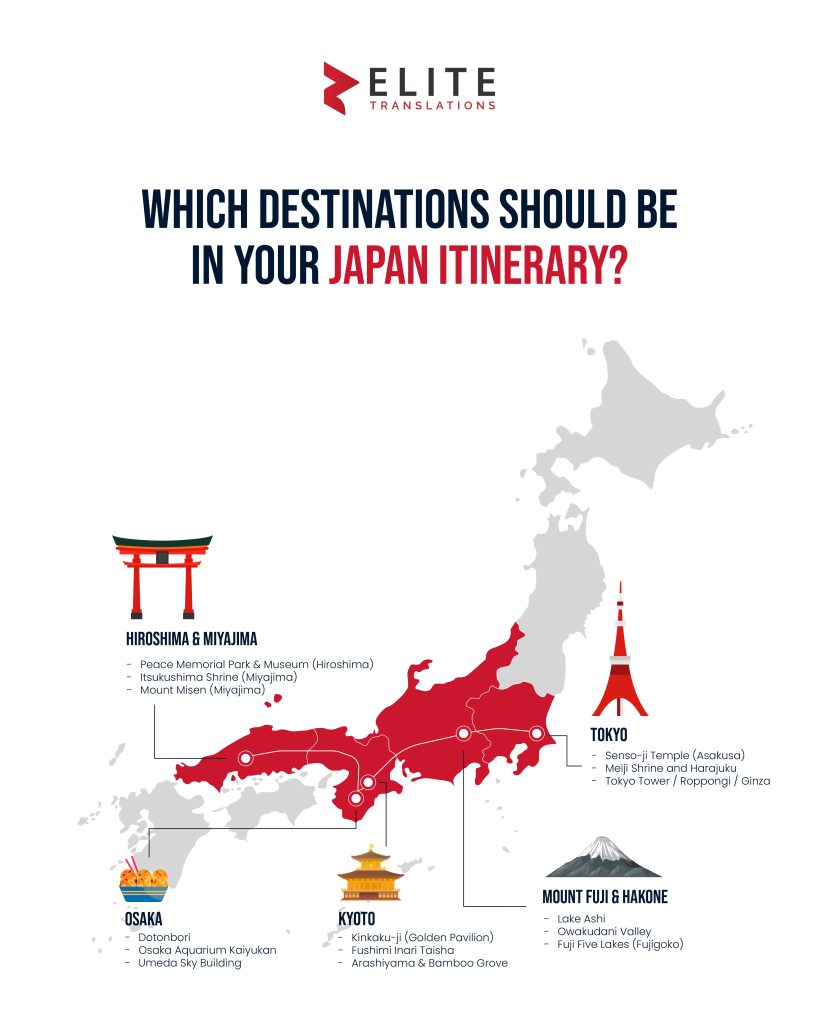
A strong Japan itinerary blends modern cities with cultural heritage and natural beauty. Below are the must-visit stops that provide a complete experience.
Tokyo
Tokyo represents Japan’s cutting-edge energy, from Shibuya Crossing to futuristic districts like Odaiba. At the same time, neighborhoods such as Asakusa offer glimpses of Japan’s traditions. Therefore, Tokyo is a city where you can experience both the modern and the historical in one stop.
Kyoto
The cultural heart of Japan, filled with shrines, temples, tea houses, and the iconic Fushimi Inari gates. Moreover, Kyoto served as Japan’s capital for over a thousand years before Tokyo took its place, which is why so many of the nation’s most treasured traditions and historic sites are preserved here. Its districts, such as Gion, allow visitors to step back in time and witness traditions that remain alive today.
Osaka
Osaka is Japan’s kitchen. From takoyaki to okonomiyaki, the city is a paradise for food lovers. In addition, the neon lights of Dotonbori make Osaka one of the most vibrant stops on any Japan itinerary.
Hiroshima and Miyajima
Hiroshima offers a sobering but essential visit to the Peace Memorial Park. Nearby, Miyajima enchants travelers with the floating torii gate of Itsukushima Shrine. Together, they provide both reflection and inspiration
Mount Fuji and Hakone
Mount Fuji is not only Japan’s most iconic symbol but also a breathtaking natural wonder. From Hakone, travelers can enjoy hot springs, lakeside views, and even a chance to glimpse Fuji on a clear day. Hence, this stop adds serenity and natural beauty to your Japan itinerary.
Travel Tips To Make Your Japan Itinerary Smoother
Good planning makes your trip more enjoyable and less stressful. Here are some tips to keep in mind:
- Book flights and accommodations early to secure better rates.
- Stay in business hotels, capsule hotels, or guesthouses for affordable comfort.
- Use a Japan Rail Pass if traveling between multiple cities.
- Choose regional passes or buses if you’re focused on just one area.
By preparing these basics in advance, you’ll avoid unnecessary expenses and maximize your time in Japan.
How Much Should You Budget for a Japan Trip?
Your daily budget depends on travel style, but here are average ranges to guide you:
- Mid-range travelers: ¥10,000–¥15,000 (US$65–100) per day, including food, transport, and attractions.
- Budget travelers: Less, by eating at convenience stores, ramen shops, or curry houses and focusing on free attractions.
- Splurges: Experiences like fine dining, shopping, or luxury hotels quickly increase daily expenses.
Remember, knowing in advance where to save and where to spend helps keep your finances balanced.
Where Should You Eat in Tokyo?
Tokyo’s food scene has options for every budget. Consider these choices:
- Convenience stores (konbini): Affordable bentos and snacks for just a few hundred yen.
- Ramen or gyudon shops: Hearty meals usually under ¥1,000.
Tokyo’s food scene has options for every budget. Consider these choices: - Izakayas and teishoku restaurants: Casual sit-down meals for ¥1,000–¥2,500.
- Sushi and themed dining: Starting around ¥3,000, depending on quality and location.
By taking advantage of these, you can easily enjoy Tokyo’s world-class dining without overspending.
What Logistics Should You Consider in Japan?

Smooth logistics make or break a trip. To ensure a seamless experience, consider these essentials:
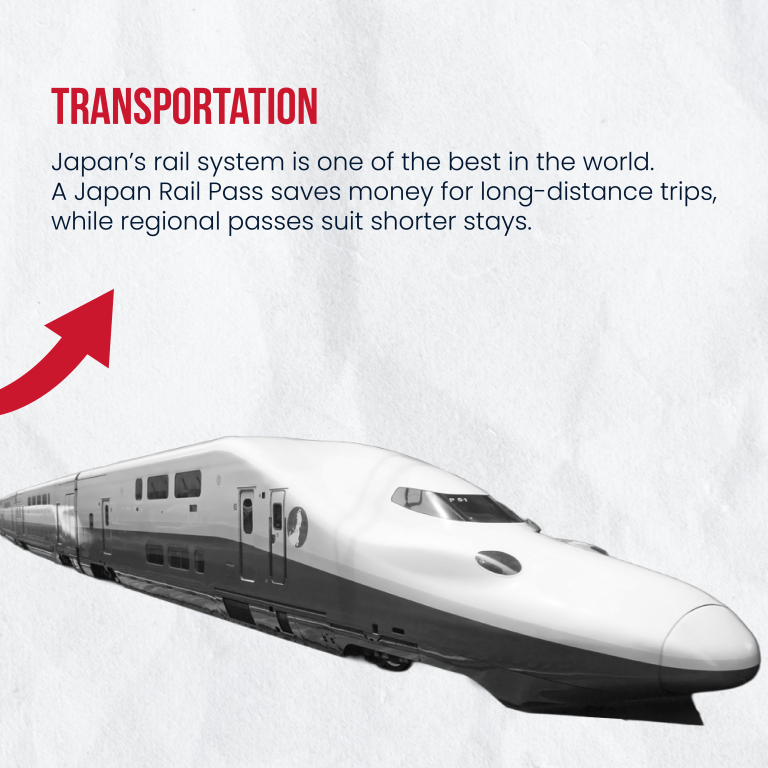
- Transportation: Japan’s rail system is one of the best in the world. A Japan Rail Pass saves money for long-distance trips, while regional passes suit shorter stays.
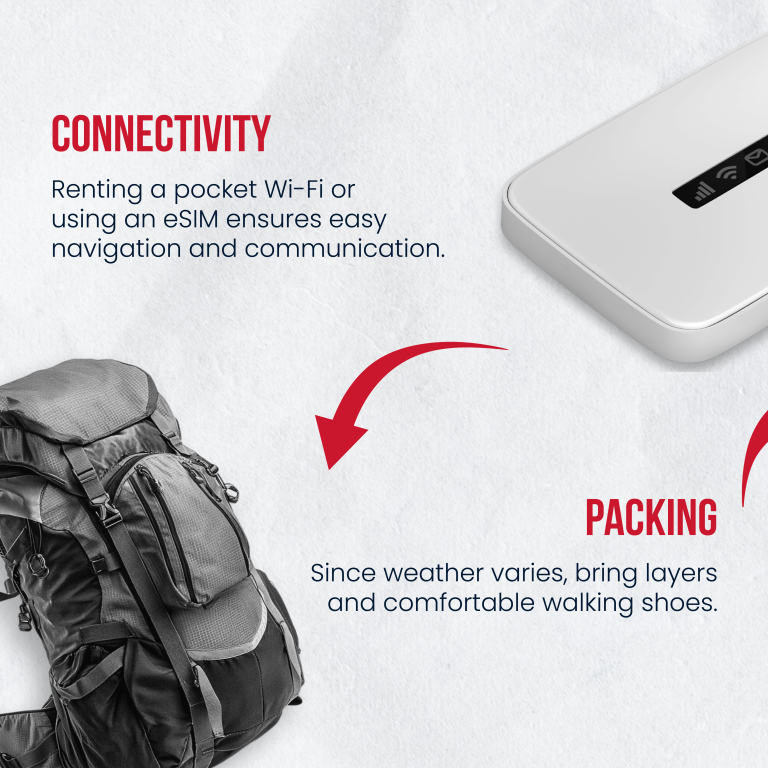
- Connectivity: Renting a pocket Wi-Fi or using an eSIM ensures easy navigation and communication.
- Packing: Since weather varies, bring layers and comfortable walking shoes.
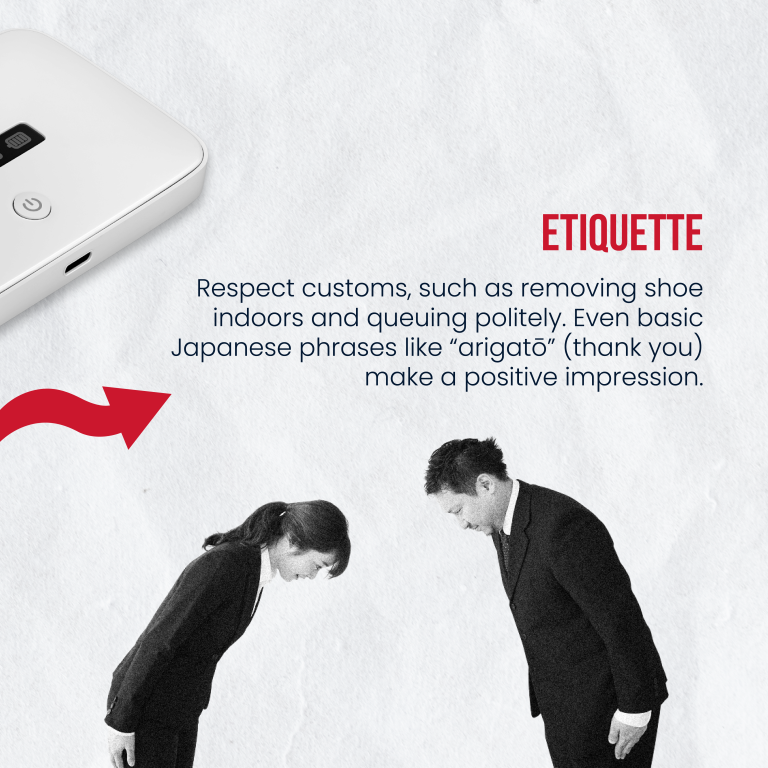
- Etiquette: Respect customs, such as removing shoes indoors and queuing politely. Even basic Japanese phrases like “arigatō” (thank you) make a positive impression
Remember, preparing these details in advance helps your Japan itinerary unfold smoothly from day one.
Why Should You Finalize Your Japan Itinerary with Expert Help?
Your Japan itinerary is more than just a schedule—it’s the foundation of your travel experience. Therefore, it deserves both careful planning and reliable professional support. Elite Translations stands ready to help you prepare your travel documents, ensuring a stress-free journey.
So, before you embark on your adventure, contact us today to keep you confident and prepared.
FAQs
Q: How many days are enough for a Japan tour?
A: For first-time visitors, 10 to 14 days is ideal. This allows you to cover Tokyo, Kyoto, and at least one or two additional cities.
Q2: When is the best time to travel to Japan?
A: Spring and autumn are most popular due to cherry blossoms and fall foliage. However, winter and summer can also provide unique seasonal experiences.
Q3: Do I need to speak Japanese to enjoy my Japan itinerary?
A: Not necessarily. Familiarity with basic customs and etiquettes are enough, especially since English is commonly used in major tourist spots within the country.