
For many Overseas Filipino Workers (OFWs), preparing documents for employment or migration involves a long and complicated process. Before 2019, Filipino workers passed through several government agencies and even visited foreign embassies to have their papers recognized abroad. This multi-step verification system, known as the “red ribbon” authentication process, required them to spend time, money, and energy.
However, the introduction of the Apostille Convention significantly changed the landscape of international document authentication. This international treaty streamlines how countries verify and accept public documents. For OFWs, it means faster approval of birth certificates, diplomas, and other essential records.
TL;DR
The Apostille Convention is a 1961 international treaty that allows public documents to be recognized across member countries without additional embassy legalization. Since the Philippines joined in May 2019, DFA-issued Apostilles have replaced the old red ribbon system. As a result, OFWs can submit their documents abroad faster and at lower cost.
What Is the Apostille Convention and Why Does It Matter?
The Apostille Convention, formally known as the Hague Convention of 1961, simplifies how countries verify public documents. It ensures that every member state automatically recognizes a document once another member state authenticates it, eliminating the need for further embassy legalization.
Hence, OFWs no longer spend weeks completing embassy verifications. With the Department of Foreign Affairs (DFA) issuing a single Apostille certificate, employers, schools, and immigration offices abroad directly accept documents such as birth certificates or diplomas.
In essence, this Convention builds trust between nations and promotes global mobility while reducing bureaucratic obstacles for Filipino workers.
How Did the Apostille Convention Begin?
Before the Apostille Convention, people who needed other countries to recognize their documents completed multiple layers of authentication, including checks by local authorities, foreign ministries, and embassies. This process created inefficiency and inconsistency across countries.
So, in October 1961, the Hague Conference on Private International Law established the Apostille Convention to unify how nations authenticate documents. The goal was clear: the Conference aimed to replace lengthy embassy legalization with a single, standardized certificate that all member states recognize.
Today, more than 125 countries participate in this treaty, proving its effectiveness in promoting international cooperation and transparency.
When Did the Philippines Join the Apostille Convention?
The Philippines officially joined the Apostille Convention on May 14, 2019. From that date onward, the DFA – Office of Consular Affairs began issuing Apostilles instead of authentication certificates and retired the long-standing “red ribbon.”
Consequently, for countries that belong to the Convention, the DFA treats the Apostille as the final step. Only non-member states, such as Germany and Finland, require embassy legalization. This development allows OFWs to save both time and money when they prepare documents for work or residency abroad.
What Documents Can Be Apostilled in the Philippines?
In general, the Apostille covers public documents that the DFA previously authenticated. Before you submit your papers, you must identify which documents qualify.
Common examples include:
- Civil documents: birth, marriage, and death certificates issued by the Philippine Statistics Authority (PSA).
- Educational records: diplomas, transcripts, and Certificates of Authentication and Verification (CAVs).
- Legal and court papers: court decisions, notarized affidavits, and powers of attorney.
- Government-issued records: NBI clearances, employment certifications, and licenses.
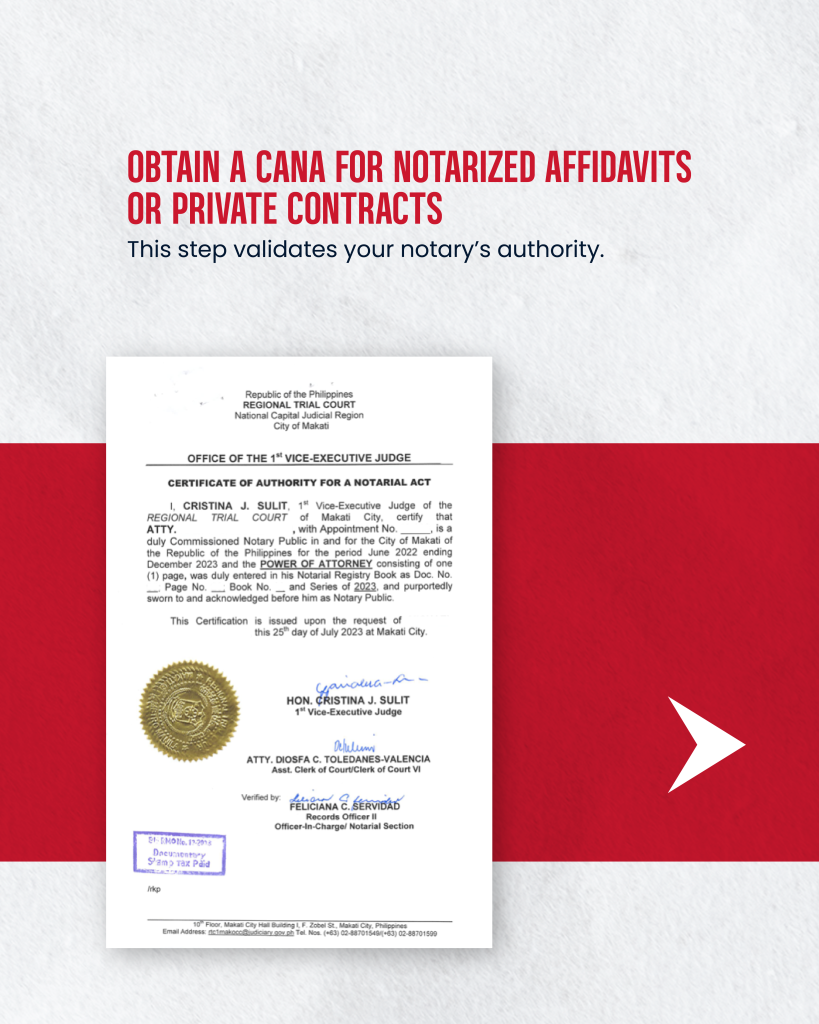
For private documents, the process differs slightly. You must secure a Certificate of Authority for a Notarial Act (CANA) from a Regional Trial Court before the DFA affixes the Apostille.
Thus, when you organize your documents properly, you make sure that each paper meets all Apostille requirements before you submit it.
How To Obtain an Apostille from the DFA?
The process for securing an Apostille stays relatively simple once you complete and certify your documents. However, you must prepare early to avoid delays.
Here’s the general process:
- Prepare your original documents. Make sure they’re signed, sealed, and issued by the proper authority.
- Book an appointment through the DFA Apostille Portal or at a DFA consular office.
- Submit your documents along with valid identification.
- Pay the applicable fee (₱100 for regular processing or ₱200 for expedited service).
- Claim your Apostilled documents on the release date indicated in your receipt.
Once you attach the Apostille certificate, your papers become ready for international submission. Hence, OFWs no longer need to visit embassies to have authorities recognize their documents.
How Much Does the Apostille Process Cost?
Fortunately, the Apostille process provides both affordability and efficiency. The DFA charges only ₱200 for expedited processing, which takes around two working days, for both standard and electronic copies. Applicants pay a nonrefundable fee. Additionally, when applicants book an online appointment, they must remember that no expedited appointment exists, contrary to what fixers may claim.
How Should OFWs Prepare Their Documents for Apostille?
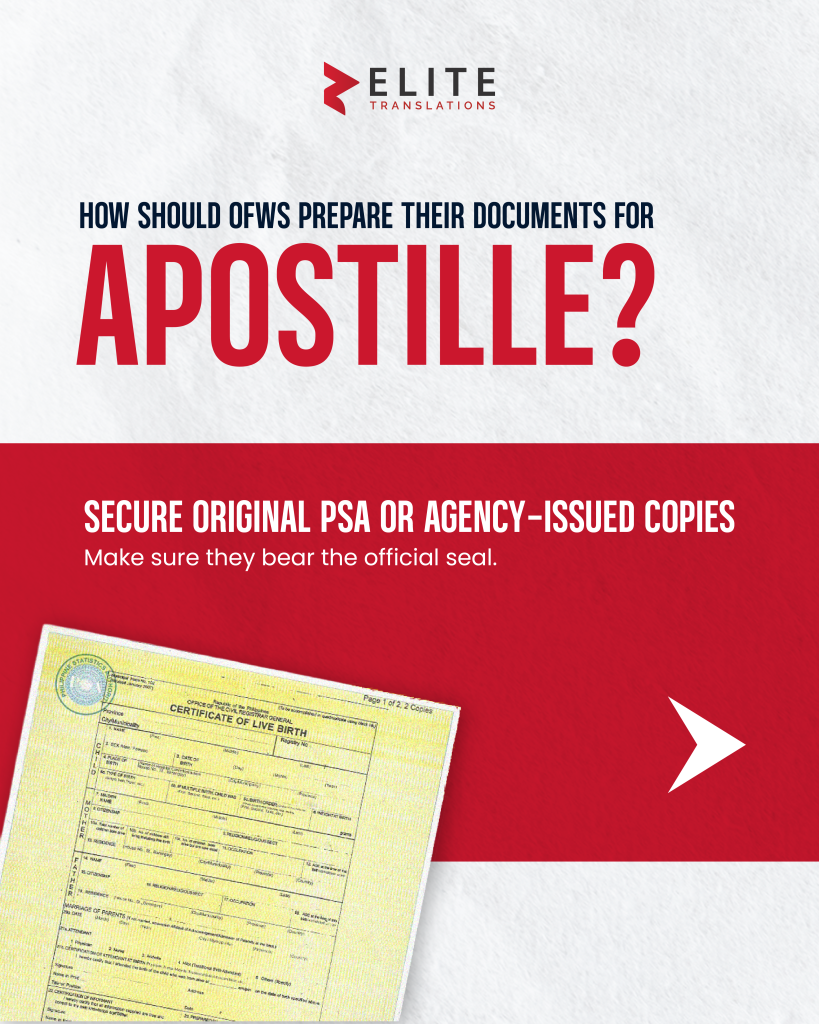
Before visiting the DFA, OFWs should ensure their paperwork is accurate, complete, and properly formatted. Here’s what to do:
- Secure original PSA or agency-issued copies. Make sure they bear the official seal.
- Obtain a CANA for notarized affidavits or private contracts. This step validates your notary’s authority.
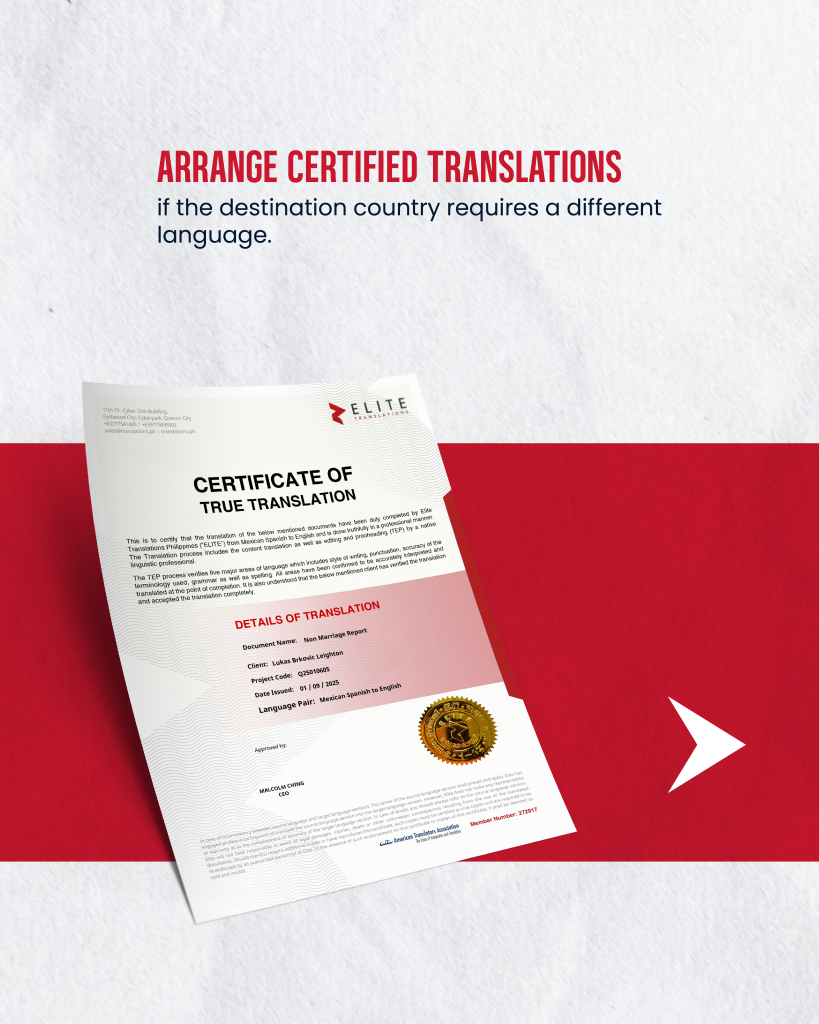
- Arrange certified translations if the destination country requires a different language.
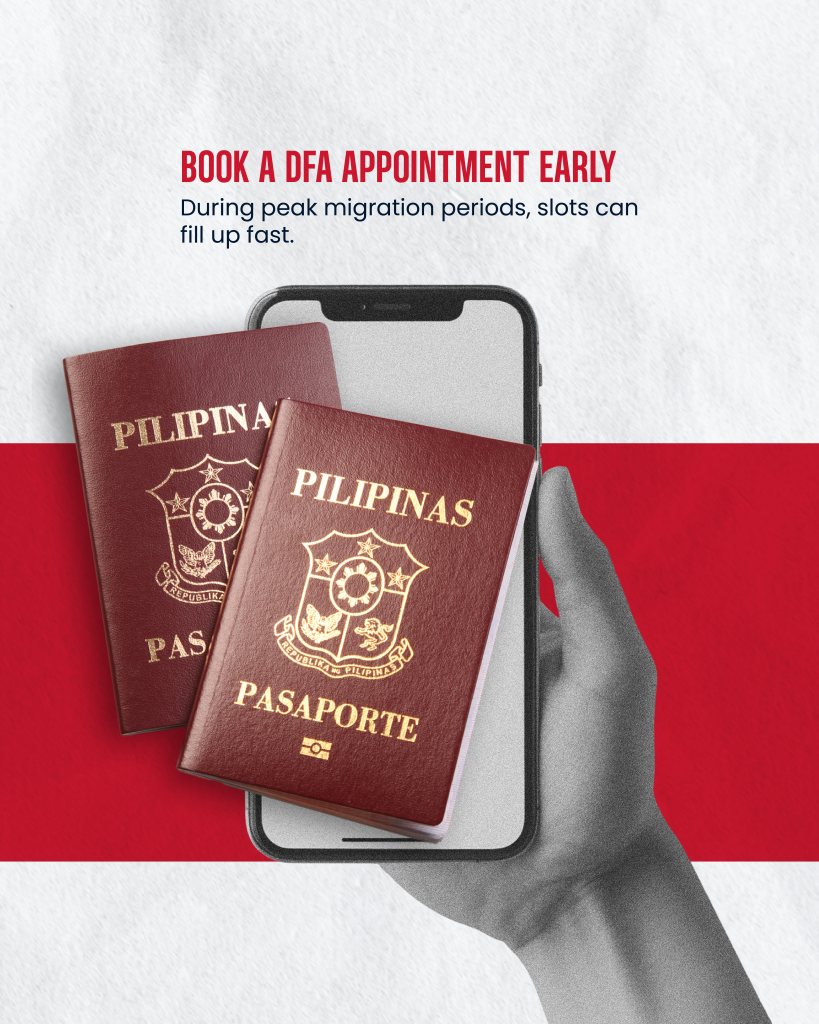
- Book a DFA appointment early. During peak migration periods, slots can fill up fast.
Hence, careful preparation not only speeds up the Apostille process but also prevents rejections or costly reapplications later.
Do Apostilled Documents Still Need Translation?
Yes. While the Apostille verifies a document’s authenticity, it does not translate its content. Therefore, if your destination country uses a language other than English or Filipino, you must hire a certified translator to translate your Apostilled documents.
Certified translations help employers, schools, and immigration officers understand your certificates, contracts, and affidavits. Moreover, professional translators boost your documents’ legal credibility by attaching an affidavit that affirms accuracy and completeness.
How Does Elite Translations Help With Apostille-Related Needs?
Elite Translations provides end-to-end support to help OFWs prepare Apostille-ready documents efficiently and accurately. Every step of our process is designed to meet both DFA and international standards, ensuring full compliance and peace of mind.
Our specialized Apostille-related services include:
- Certified Translations: We translate vital records such as birth certificates, diplomas, and affidavits into over 150 languages. Each translation includes an affidavit of accuracy and the official Elite company seal.
- Notarial and CANA Coordination: Through our partner legal offices, we also help clients secure the necessary Certificate of Authority for a Notarial Act for private document.
- Document Formatting and Review: We ensure translated documents match Apostilled originals in layout and detail, reducing risks of rejection abroad.
Additionally, Elite Translations has established a reputation as a reliable partner of government agencies here and abroad. This solidifies the trust that public institutions, global brands, and individuals alike have had for us through the years.
Get Started With the Apostille Process
If you’re planning to work or migrate abroad, now is the best time to get your documents Apostille-ready. Elite Translations can help you every step of the way—from translation, apostille and notarial guidance for DFA submission support.
Contact us today to have your documents translated, certified, and prepared for Apostille. Visit our website or reach out to our hotline to get started. Hence, with professional guidance, your journey abroad becomes smoother, faster, and worry-free.
FAQs
Q: What is the Apostille Convention?
A: It’s a 1961 treaty that simplifies document legalization between countries by introducing a single Apostille certificate.
Q: Which documents can be apostilled?
A: Civil, educational, and legal documents authenticated by the DFA, plus notarized private documents with a CANA.
Q: Do I need translation after Apostille?
A: Yes. Apostilles confirm authenticity, not language. Certified translations are still required for non-English countries.