

The digital nomad visa is gaining popularity in 2025 as more professionals embrace the freedom of remote work. This special visa allows you to legally live and work in a foreign country longer than a standard tourist visa—provided you meet the criteria. From income thresholds to required documents, every country has its own rules.
Therefore, understanding how digital nomad visas work—and what it takes to qualify—is crucial before booking that one-way ticket. In this guide, we break down the essentials, highlight top destinations, and explain how Elite Translations can help you meet the document requirements with confidence.
What Is a Digital Nomad Visa?
A digital nomad visa is a residency permit that lets remote workers legally stay in another country while continuing to work online for clients or employers abroad. Unlike tourist visas that limit how long you can remain in a country (often to 30–90 days), these permits typically last for a year or more.
Though only a few countries label their programs as “digital nomad visas”, many others allow remote workers to apply under freelancer or extended-stay options. As of 2025, over 50 countries now offer some version of this visa.
One notable addition this year is the Philippines. Under Executive Order 86, the country now offers an official Digital Nomad Visa to eligible foreign nationals. It allows remote professionals to stay in the country for up to one year, with the option to renew once.
Ultimately, these programs are designed to support professionals who earn from foreign sources—not those seeking local employment.
Who Are Digital Nomads?
Digital nomads are individuals who work entirely online, allowing them to live and travel freely. Hence, they are not tied to one physical office or location. Many come from industries like:
- Tech – Front-end developer, back-end developer, data analyst, DevOps engineer, QA tester, app developer
- Design – UI/UX designer, graphic designer, web designer, motion graphics designer, brand designer, product designer
- Marketing – Social media manager, SEO specialist, content marketer, PPC ads specialist, email marketing manager, affiliate marketer
- Writing – Copywriter, content writer, technical writer, scriptwriter, editor
- Consulting – Business consultant, HR consultant, IT consultant, financial consultant, brand strategist, digital transformation consultant
While some digital nomads are freelancers or self-employed, others work full-time for companies based abroad. What they share is the ability to work remotely using digital tools—from coworking spaces, coffee shops, or even beachfront resorts.
Following the rise of remote work during the pandemic, more countries have opened their doors to this growing demographic. As a result, digital nomad visa programs have emerged globally, blending travel with career flexibility.
Top Countries Offering a Digital Nomad Visa in 2025
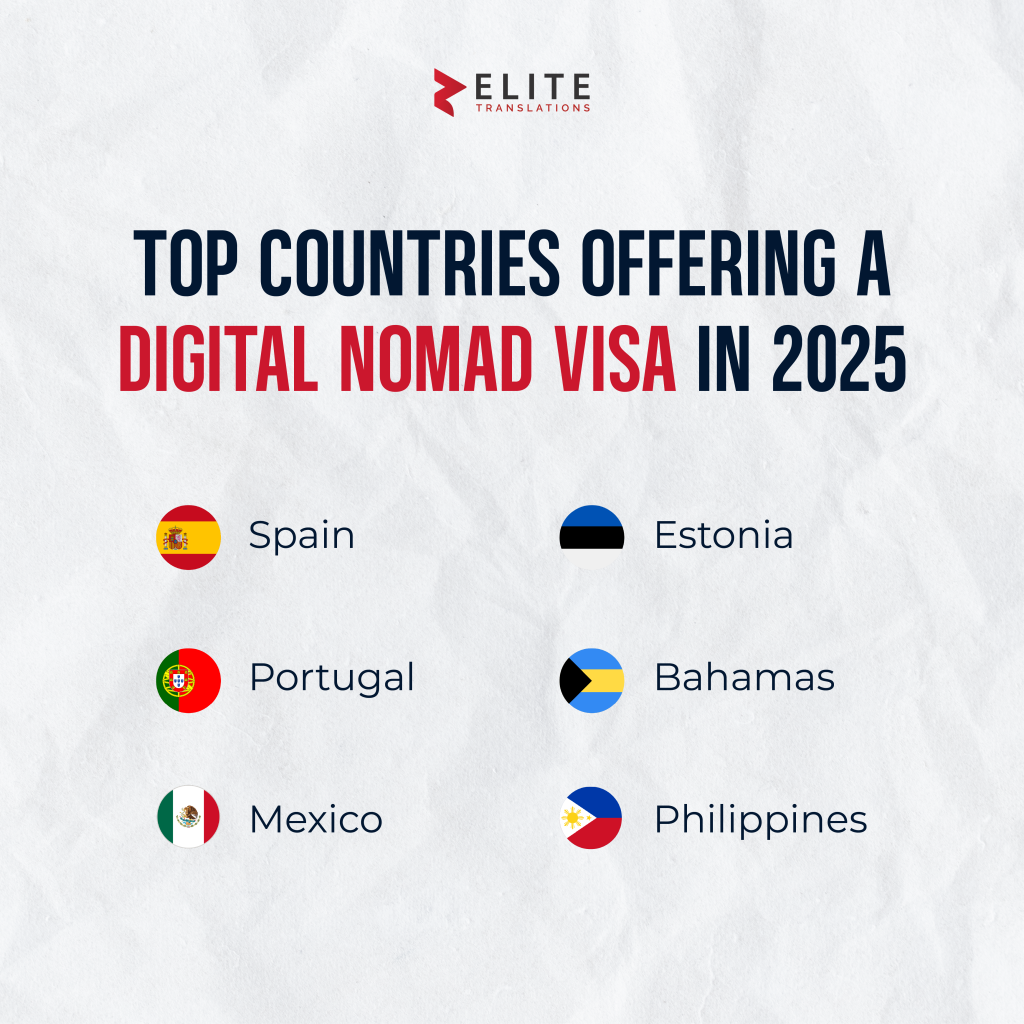
Several destinations have become hotspots for remote workers due to friendly visa policies, affordable living, and strong infrastructure. Below are some standout countries and what their digital nomad visa programs offer:
🇪🇸Spain: Offers a renewable 1-year visa through its startup law. Applicants need a monthly income of €2,500 and enjoy a reduced 15% tax rate for four years.
🇵🇹Portugal: The D8 visa grants a one-year stay (renewable), with an income requirement of about €3,280/month. The country offers tax benefits and vibrant expat communities.
🇲🇽Mexico: Through its Temporary Resident Visa, Mexico allows up to 12 months initially, renewable for up to 4 years. Applicants need about $2,595/month in income.
🇪🇪Estonia: A digital pioneer, Estonia allows non-EU applicants to stay for one year. It requires a monthly income of around €3,500.
🇧🇸Bahamas: The BEATS visa offers a 1-year stay, family inclusivity, and zero local income tax. Monthly income must be around $5,000.
🇵🇭Philippines: Under its newly introduced program, eligible foreign nationals can stay for up to 12 months (renewable once). Requirements include health insurance, a clean record, and income from abroad.
These countries have tailored their programs to attract remote professionals looking for stable internet, legal residency, and a lifestyle that blends work with travel.
Thus, whether you prefer island life or European cityscapes, there’s likely a program that fits your needs.
How Long Does a Digital Nomad Visa Last?
In most cases, a digital nomad visa grants an initial stay of 12 months. Several countries allow renewals, while a few offer shorter or longer durations.
For example:
- The Philippines issues a 1-year visa, renewable for another year.
- Spain, Portugal, and Mexico also follow the 1-year initial stay structure.
- Japan offers a shorter option—6 months with no extension.
- Panama provides a 9-month visa, extendable once.
- Guatemala stands out with a 2-year offering.
Hence, the typical duration you can expect is one year, but confirming each country’s specific terms is essential. Always review renewal policies in advance, as some may require re-submission of documents or updated financial proof.
How to Qualify for a Digital Nomad Visa
While requirements vary by country, several common qualifications apply across most digital nomad visa programs. Preparing these in advance significantly increases your chances of approval.
Here are the general eligibility criteria:
Age and Employment: Most programs require applicants to be at least 18 years old and work remotely for an employer or clients based outside the host country.
Minimum Income: Countries set income thresholds to ensure applicants can support themselves. These often range from $2,000 to $5,000 per month.
Documentation:
- Valid passport
- Clean criminal record
- Health insurance covering the host country
- In most cases, apostilled and translated documents
Additional Requirements: Depending on the country, you may also need to submit proof of accommodation, medical certificates, or non-immigrant intent letters.
Remember, it’s crucial to read the specific guidelines published by each destination’s immigration office. Small document errors or omissions are among the top reasons for application delays or denials.
Meet Visa Requirements with Confidence
As digital nomad visa programs grow in popularity, so do the challenges of meeting official document requirements. Fortunately, this is where Elite Translations can help.
At Elite Translations, we specialize in certified translations essential for visa applications. Whether your host country requires:
- Birth certificate
- University diploma
- Employment contract
- Police clearance;
- Or any other official and government-issued document
…we ensure these are translated accurately and accepted by embassies and consulates worldwide.
All our translations come with:
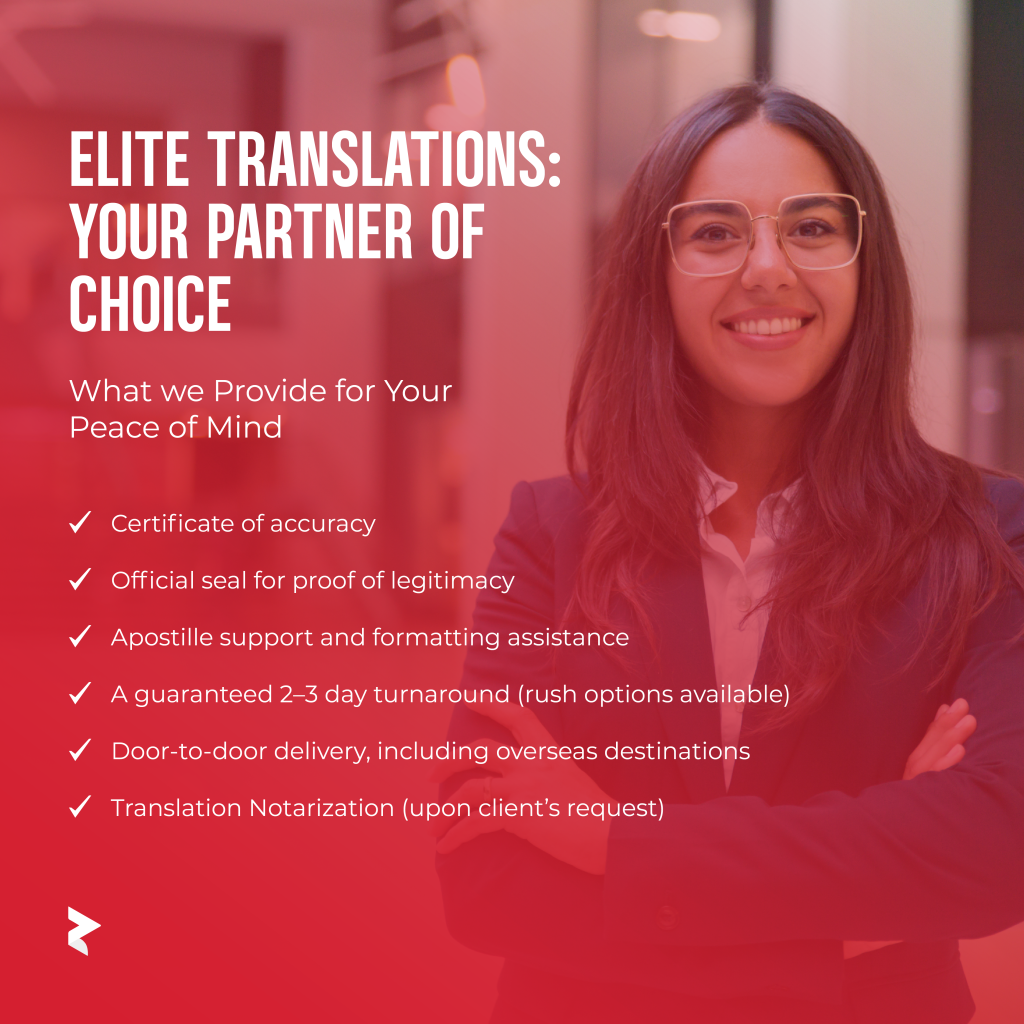
- Certificate of accuracy
- Official seal for proof of legitimacy
- Apostille support and formatting assistance
- A guaranteed 2–3 day turnaround (rush options available)
- Door-to-door delivery, including overseas destinations
- Translation Notarization (upon client’s request)
Thus, you can focus on planning your journey, not stressing over paperwork. Our services remove language barriers and ensure every detail aligns with your destination’s visa requirements.
Ready to Apply for a Digital Nomad Visa?
Remote work has changed how the world operates—and the digital nomad visa is your ticket to a location-independent lifestyle. However, the process of applying involves more than just filling out a form. Preparing your documents, meeting country-specific standards, and submitting translated materials can make or break your application.
Start your journey with a professional team that understands immigration requirements inside and out. Contact Elite Translations today for certified translations, apostille services, and document assistance tailored to digital nomads like you.