

For many OFWs building a career in the UAE, you must ensure that authorities recognize your Philippine education. Whether you aim for better employment, professional licensing, or further studies, the UAE requires proof confirming that your foreign diploma matches its national academic standards.
This requirement often surprises first-time applicants because the Certificate of Equivalency plays a crucial role in having qualifications officially accepted.
Below, we explain what the Certificate of Equivalency means, why OFWs need it, and how you can complete the process smoothly.
TL;DR
A UAE Certificate of Equivalency confirms that your Philippine degree meets UAE academic standards. OFWs need it for jobs, licensing, and further studies. The process involves attesting your diploma and transcripts, submitting Arabic translations, and applying through the MOE portal. Processing takes a few weeks. Elite Translations can provide the sworn/certified translations and notarization needed for a smooth application.
What Is a UAE Certificate of Equivalency?
The Ministry of Education in the UAE verifies foreign academic credentials by issuing a Certificate of Equivalency. This certificate confirms that your Philippine degree matches UAE educational standards. Therefore, if you fail to secure the certificate, UAE employers, universities, and government authorities may reject your diploma.
For example, the MOE examines your Philippine degree and determines whether it equals a UAE bachelor’s degree level. Hence, this validation protects employers and institutions by ensuring that everyone’s qualifications follow the same framework.
Why Do OFWs Need a Certificate of Equivalency in the UAE?
OFWs in fields such as nursing, engineering, education, hospitality, and IT must secure a Certificate of Equivalency before they use their credentials for employment or licensing. This requirement applies to new workers and to those who pursue career advancement.
Importantly, regulatory bodies in the UAE rely on this certificate when they issue permits or licenses. For instance, healthcare workers applying under DHA or MOH often cannot proceed without an equivalency certificate. Similarly, individuals who pursue graduate studies or change professions must present it to universities or industry bodies.
As a result, those who fail to obtain it may face delays or encounter restrictions in job placement and visa processing.
What Documents Do You Need for a UAE Certificate of Equivalency?
Before you start your application, know the required documents. These documents let the MOE verify your credentials’ authenticity and academic level. Hence, preparing them early speeds up your processing.
Common requirements include:
- Original diploma or certificate of graduation
- Official transcripts of records
- Passport copy and UAE visa copy
- Attestation records from your school, DFA, and the UAE Embassy
- Any additional forms requested by the MOE
First, authenticate these documents to prove they are genuine. Afterward, the UAE MOE uses them to evaluate your educational background.
Ultimately, securing all paperwork in advance ensures you meet MOE standards and reduces the chance of rejection.
Step-by-Step Process for Getting a UAE Certificate of Equivalency
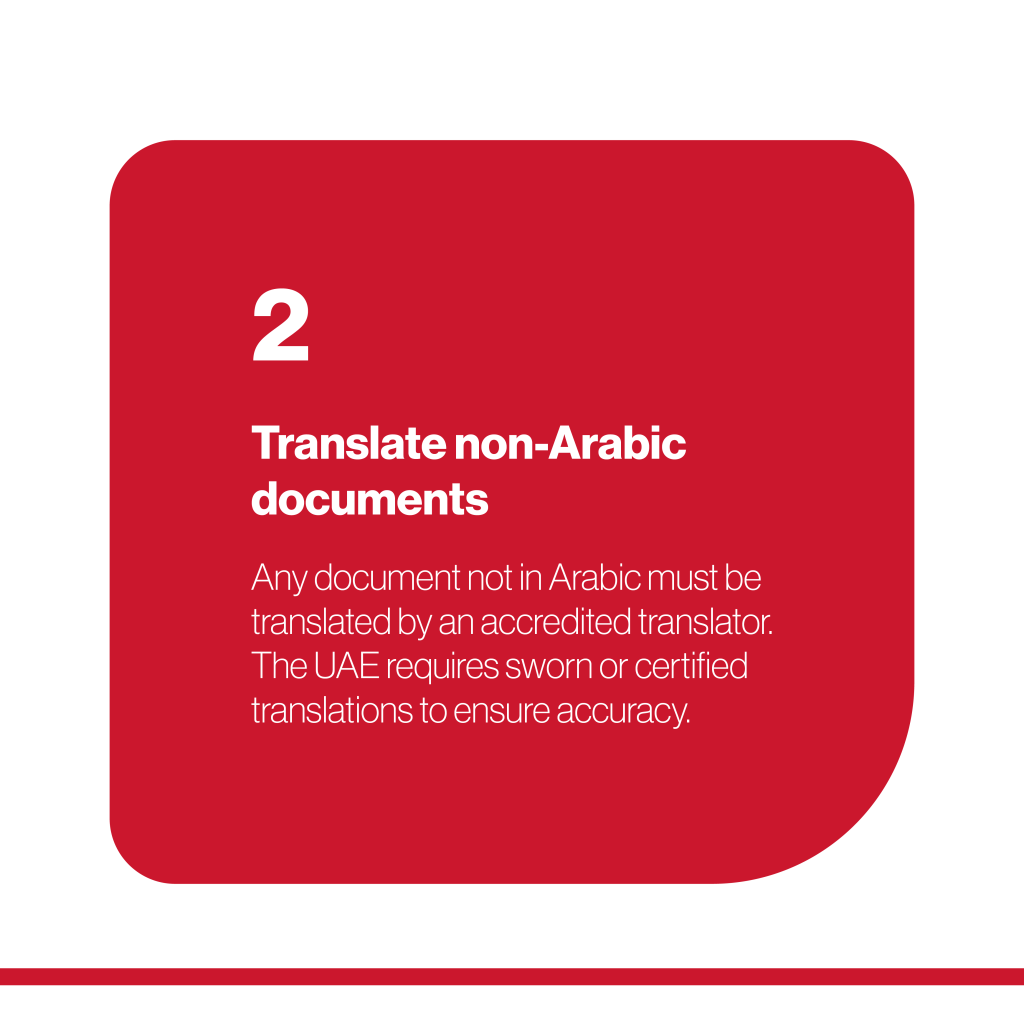
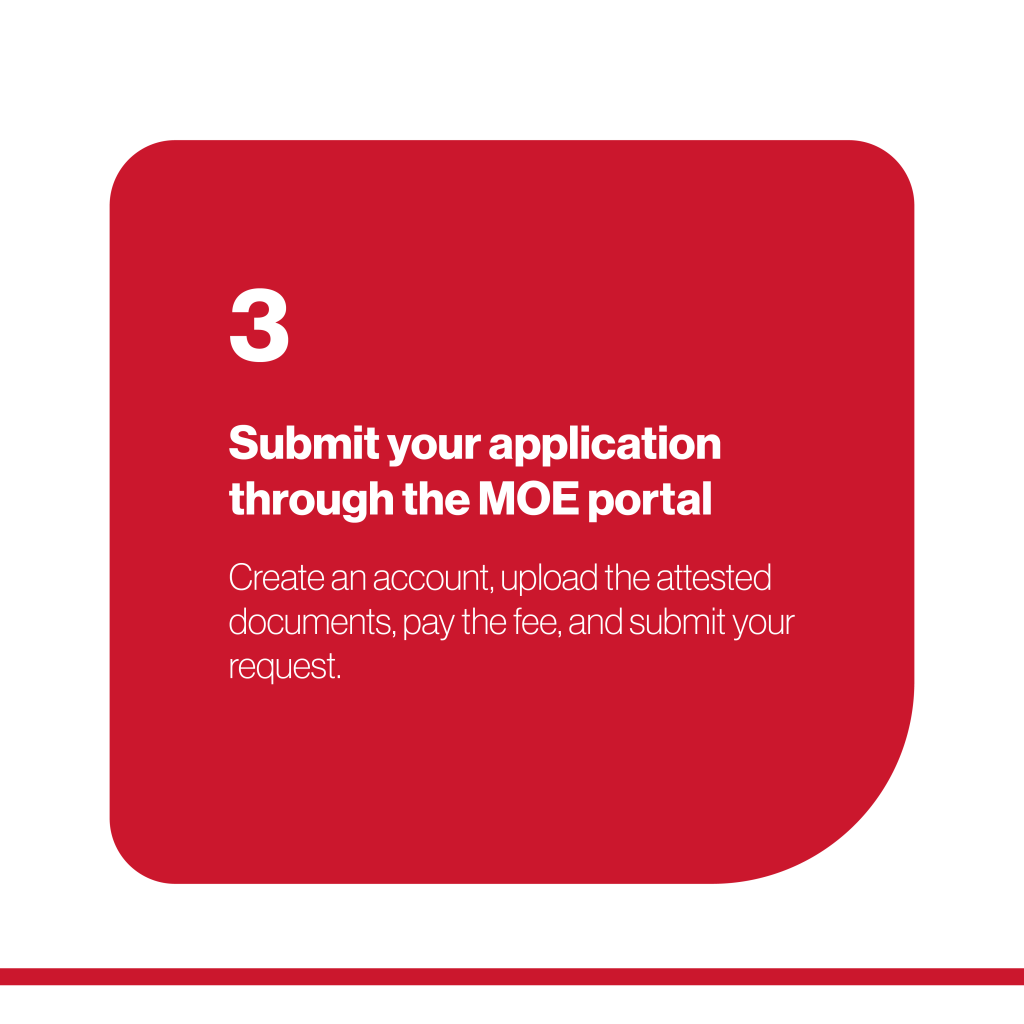
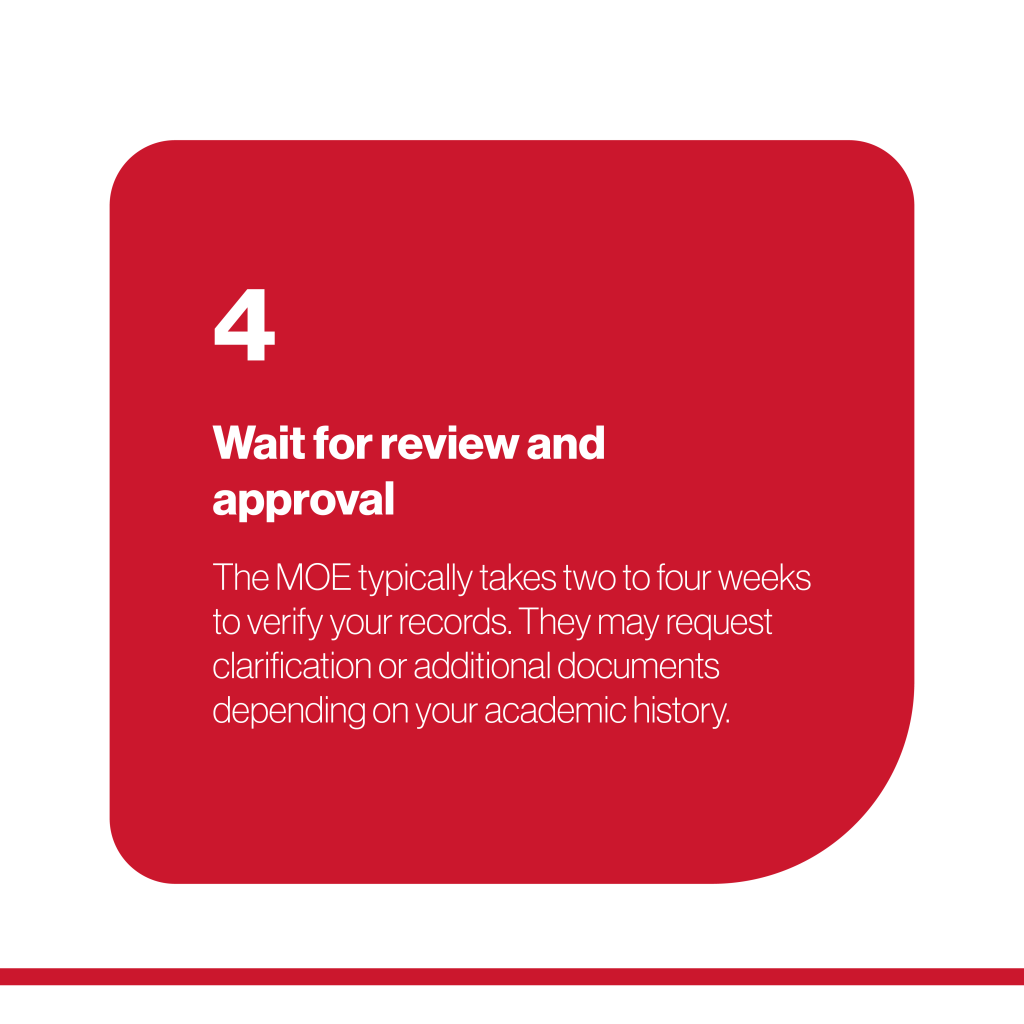
Follow the equivalency process carefully because each step serves a specific purpose. Fortunately, understanding the flow makes it much easier to manage.
Here’s how it typically works:
- Prepare and attest your documents.
Gather your diploma, transcripts, and other records, then complete the required attestations in the Philippines and at the UAE Embassy. - Translate non-Arabic documents.
Any document not in Arabic must be translated by an accredited translator. The UAE requires sworn or certified translations to ensure accuracy. - Submit your application through the MOE portal.
Create an account, upload the attested documents, pay the fee, and submit your request. - Wait for review and approval.
The MOE typically takes two to four weeks to verify your records. They may request clarification or additional documents depending on your academic history.
To summarize, these steps ensure that both your school credentials and their translations meet UAE standards, which helps avoid delays.
Why Is Arabic Translation Required for a Certificate of Equivalency?
The UAE requires Arabic translations for all documents submitted to the MOE if the originals are not in Arabic. This policy ensures officials evaluate educational credentials accurately and consistently. Therefore, you must use legally accredited translators.
Accredited translations may include:
- Sworn translations by court-authorized linguists
- Certified translations by government-recognized translators
- Notarized translations for added legal authentication
These translations help the MOE understand your academic background and prevent misunderstandings or rejections.
Truthfully, you must provide accurate translations because they form an essential step.
How Can Elite Translations Help?
Processing a Certificate of Equivalency can feel overwhelming, especially when dealing with attestations, legal formatting, and translation rules. However, Elite Translations offers specialized support designed for OFWs and UAE-bound applicants.
Our services include:
- Sworn Translations – Authorities like the UAE MOE require sworn translations when court-authorized linguists complete them and when officials need legally recognized and officially sworn translations for document evaluation
- Certified Translations – These are translations prepared by professional linguists who issue a signed certification attesting to the accuracy and completeness of the translation. They are commonly required for academic, employment, visa, or licensing submissions.
- Notarized Translations – Through our partner legal offices, we can fully handle the notarization process for your documents.
Certainly, we ensure your documents meet UAE MOE standards so you can focus on your career or academic plans without worrying about technicalities.
Ready to Start Your Application?
If you’re preparing for work or further studies in the UAE, securing your Certificate of Equivalency early will save you time and prevent setbacks.
Contact us for a free consultation or quotation, and let our team handle your sworn translations, notarizations, and document preparation with accuracy and care.
FAQs
Q: What is a Certificate of Equivalency in the UAE?
A: It is an official MOE document confirming that your Philippine academic credential meets UAE standards.
Q. Are Arabic translations mandatory in the UAE?
A: Yes. Non-Arabic documents must be translated by accredited translators to meet MOE rules.
Q: Why do OFWs need a certificate of equivalency in the UAE?
A: It is required for employment, licensing, and further education in the UAE.